
News & Events
How to choose revit course Based on Your Learning Style
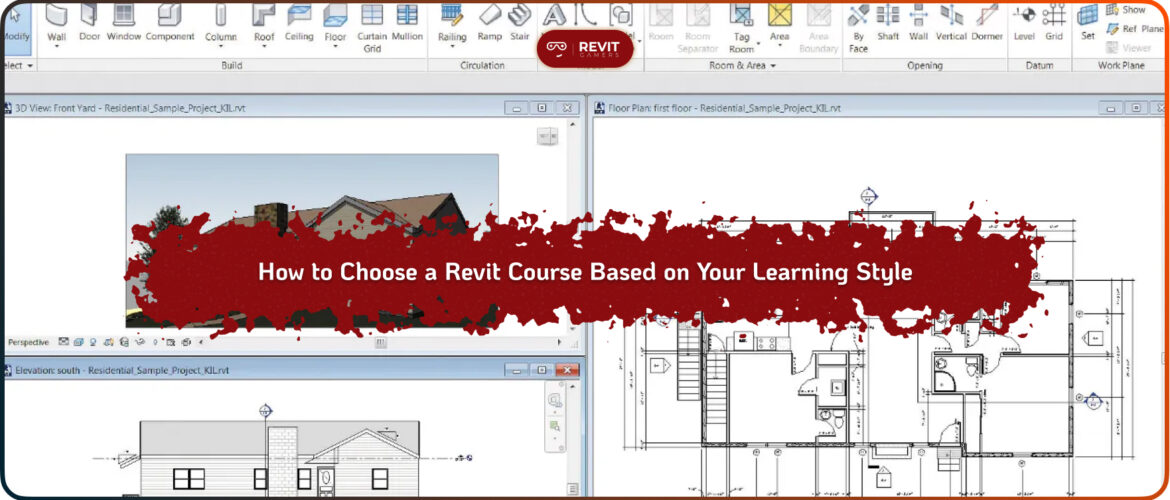
Choosing the right Revit course is not as simple as picking the most popular option or the cheapest one. In 2027, the number of online Revit courses has exploded, and almost every platform claims to be the best. This creates a confusing situation for learners, especially beginners who do not yet know what kind of learning method suits them. That is why understanding how to choose revit course based on your personal learning style is far more important than simply comparing course names or prices.
Revit is a complex BIM software used in architecture, engineering, and construction industries. It is not a tool you can master just by watching random tutorials. It requires structured learning, hands-on practice, and gradual skill development. However, different people learn in different ways. Some learn faster through visuals, others through hands-on practice, and some prefer structured theoretical explanations before applying anything.
Because of this, choosing the wrong course can slow down your progress significantly. A visual learner stuck in a text-heavy course may feel lost. A hands-on learner in a purely lecture-based program may get bored and lose motivation. This mismatch between learning style and course structure is one of the biggest reasons people fail to progress in Revit.
The goal of this article is to help you understand your own learning style and match it with the right type of Revit course. Instead of guessing or following trends, you will learn how to make a strategic decision that improves your learning speed and efficiency. We will break down different learning styles, explain which course types suit each one, and show you how to avoid common mistakes when trying to choose revit course effectively.
By the end of this guide, you will be able to confidently select a Revit course that matches your personality, improves your learning experience, and helps you reach professional skills faster without wasting time on unsuitable content.
Learn more: Revit Classes Comparison: In-Person vs Online with Visuals
Revit Gamers is offering
The most efficient
& market's only animated Revit training
Learn More
Why Learning Style Matters in Revit Learning
Understanding your learning style is one of the most important factors when you try to choose revit course. Many learners ignore this and instead focus only on course ratings, price, or popularity. While these factors are useful, they do not guarantee success if the course does not match how your brain processes information.
Revit is not a simple software where memorization is enough. It requires understanding workflows, spatial logic, and how different building elements interact in a digital environment. Because of this complexity, the way you absorb information plays a huge role in how fast you learn.
For example, some learners are visual thinkers. They understand concepts better when they see animations, diagrams, or step-by-step demonstrations. Others are hands-on learners who only understand something after doing it themselves inside the software. There are also analytical learners who prefer understanding the theory behind every action before practicing it.
If you choose a course that does not match your learning style, the result is usually frustration. You may feel like Revit is too difficult, when in reality the problem is not the software it is the learning method. This is why many beginners quit early, not because Revit is impossible, but because they are using the wrong approach.
Matching learning style with course structure can dramatically improve efficiency. It reduces confusion, increases retention, and helps you progress faster. A well-matched choose revit course decision can save weeks or even months of wasted effort.
Visual Learners: Best Type of Revit Courses
Visual learners process information best through images, animations, and step-by-step visual explanations. For this group, the decision to choose revit course should heavily focus on visual clarity and demonstration quality.
Revit is actually a highly visual software, which makes it ideal for this type of learner when taught correctly. Courses that use screen recordings, zoomed-in workflows, and animated explanations are particularly effective. Instead of reading long explanations, visual learners benefit more from watching how objects are created, modified, and connected inside a project.
Animated Revit courses or highly structured video-based programs are usually the best fit. These courses break down complex workflows into simple visual steps, making it easier to understand relationships between elements like walls, floors, doors, and structural components.
Another advantage for visual learners is pattern recognition. Revit workflows often repeat similar steps, and visual repetition helps learners remember processes faster. Seeing the same workflow multiple times in different contexts strengthens understanding.
However, not all video courses are effective. Poorly structured courses that jump between topics without clear visuals can confuse even visual learners. That is why structure still matters as much as format when trying to choose revit course for this learning style.
Platforms that focus on clean visual storytelling and structured progression tend to work best. Some modern learning systems, such as Revit Gamers-style structured training, emphasize clear visual workflows combined with real project simulations, which significantly improves learning speed for visual learners.
Learn more: change units in Revit: How to Change Project Units for International Projects
Hands-On Learners: Project-Based Courses
Hands-on learners are the type of students who cannot fully understand a concept until they apply it themselves. For this group, the best way to choose revit course is to prioritize project-based learning over theory-heavy content.
Revit is a practical software, which makes it ideal for hands-on learners. These learners perform best when they are actively building models, solving problems, and working through real project scenarios. Watching alone is not enough they need interaction with the software.
Project-based courses are designed exactly for this learning style. Instead of explaining tools in isolation, they guide learners through complete projects such as residential buildings, commercial structures, or BIM coordination tasks. This approach helps learners understand how all tools work together in a real environment.
Hands-on learners also benefit from repetition through practice. The more projects they complete, the more confident they become. Mistakes are not seen as failures but as learning opportunities. This active learning cycle is extremely effective for Revit mastery.
However, the risk for hands-on learners is jumping into projects too early without understanding fundamentals. That is why even project-based courses must follow a structured progression. A well-designed choose revit course for this type of learner should start with simple tasks and gradually increase complexity.
Some modern structured platforms, including Revit Gamers-style training systems, focus heavily on project-based progression, ensuring that learners build skills step by step instead of feeling overwhelmed.
Theoretical Learners: Structured Lecture-Based Courses
Theoretical learners prefer understanding concepts before applying them. When trying to choose revit course, they should look for structured, lecture-based programs that explain BIM principles, workflows, and logic in detail.
These learners often ask “why” before “how.” They want to understand how Revit fits into the broader BIM ecosystem before diving into modeling. For them, a course that explains concepts clearly and systematically is essential.
Lecture-based structured courses usually break down topics into organized modules. They start with fundamentals like BIM theory, project structure, and Revit architecture before moving into practical tools. This approach helps theoretical learners build a strong mental framework.
The advantage of this style is deep understanding. Learners are less likely to memorize blindly and more likely to understand how everything connects. However, the downside is that without practice, knowledge may remain abstract.
That is why the best choose revit course option for theoretical learners still includes exercises and real examples, even if the main focus is explanation.
Learn more: Reset Revit UI: Bring Back Your Lost Panels Easily
Revit Gamers is offering
The most efficient
& market's only animated Revit training
Learn More
Self-Paced Learners vs Structured Programs
Self-paced learners enjoy flexibility and independence. When they try to choose revit course, they often prefer platforms that allow them to learn anytime without deadlines.
However, self-paced learning can easily lead to inconsistency. Without structure, learners may skip important topics or lose direction. This is one of the biggest challenges in Revit learning.
Structured programs solve this by providing a clear roadmap. They guide learners step by step, ensuring no gaps in knowledge. For most learners, structured learning leads to faster and more reliable progress.
Beginner vs Intermediate vs Advanced Learners
Another key factor in how to choose revit course is skill level. Beginners need structured foundations, intermediate learners need workflow training, and advanced learners need complex BIM coordination skills. Choosing the wrong level often leads to frustration or slow progress.
Common Mistakes When You Choose Revit Course
Many learners choose courses based on price, popularity, or marketing instead of structure. Another common mistake is ignoring project content. Without real projects, Revit skills remain theoretical and incomplete.
Learn more:: How to Fix Revit File Corruption: Step-by-Step
Recommendation
Modern structured learning systems focus heavily on matching learning styles with practical workflows. Some platforms, like Revit Gamers-style structured training, emphasize guided progression, visual clarity, and real project experience. This combination helps different types of learners visual, hands-on, and theoretical stay aligned with their learning path while reducing confusion and improving speed.
Final Verdict & Action Plan
To effectively choose revit course, you must first understand your learning style, then match it with the right course structure. There is no universal best course only the best course for you. Once this alignment happens, learning Revit becomes significantly faster, smoother, and more efficient.
Learn more: Fix Revit Errors: Most Common Problems and How to Solve Them
Revit Gamers is offering
The most efficient
& market's only animated Revit training
Learn More
Leave a Reply
You must be logged in to post a comment.