
News & Events
Revit Salary: How Much Do BIM Professionals Really Earn Worldwide?
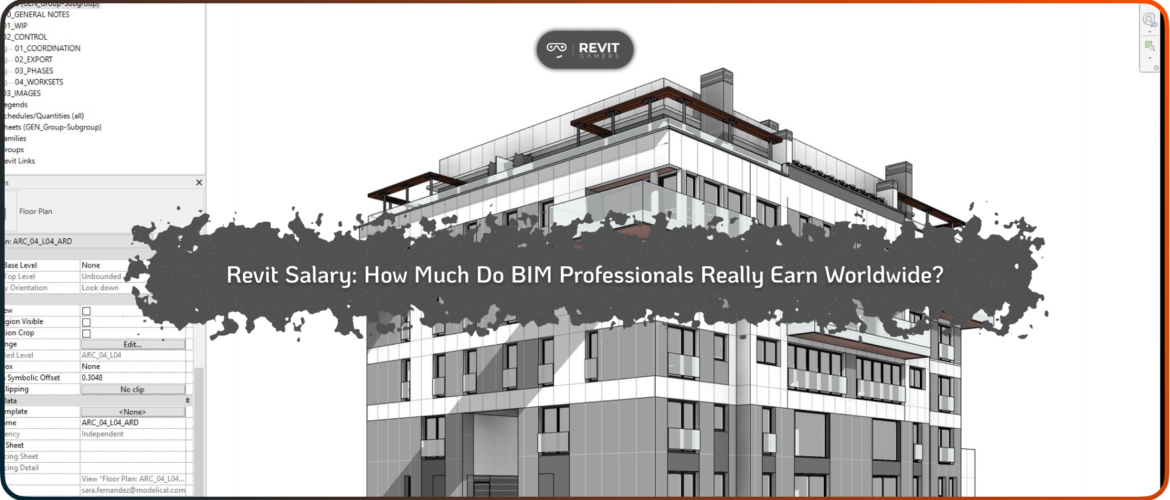
One of the most common questions asked by architecture students, CAD technicians, and aspiring BIM professionals is simple: what is the real revit salary in today’s market? As Building Information Modeling continues to reshape the construction industry, Revit has become one of the most valuable technical skills professionals can develop. From residential developments and commercial towers to large-scale infrastructure projects, companies across the world are actively seeking individuals who can contribute to BIM-driven workflows.
The demand for BIM professionals has increased significantly over the last decade, and 2027 is proving to be another strong year for the industry. Governments, developers, engineering firms, and architectural practices are investing heavily in digital construction processes. As a result, professionals with Revit expertise are often earning more than their counterparts who rely solely on traditional drafting software.
However, there is no single answer to the question of Revit salary. Earnings vary depending on experience level, geographic location, project complexity, and specialization. A junior BIM modeler entering the workforce will have a very different salary range than a BIM Manager responsible for coordinating multidisciplinary teams across multiple projects.
Another factor influencing income is the difference between simply knowing how to use Revit and understanding how BIM projects function in real environments. Many employers are willing to pay substantially higher salaries to professionals who understand coordination workflows, documentation standards, project collaboration, and digital construction processes.
This article explores the reality behind revit salary expectations worldwide. We will examine salary ranges for beginners, experienced professionals, specialists, freelancers, and leadership positions. We will also discuss the skills that most directly impact earning potential and explain why structured career development can significantly influence long-term income growth.
Whether you are considering learning Revit for the first time or looking to advance your existing BIM career, understanding salary expectations is essential. By the end of this guide, you will have a realistic picture of how much BIM professionals earn globally and what steps can help you reach higher income levels throughout your career.
Learn more: Revit Classes Comparison: In-Person vs Online with Visuals
Revit Gamers is offering
The most efficient
& market's only animated Revit training
Learn More
Why Revit Skills Are More Valuable Than Ever
The construction industry is experiencing a rapid technological transformation, and this shift has dramatically increased the value of Revit skills. Understanding why companies actively seek BIM professionals helps explain the strong growth in revit salary opportunities around the world.
Historically, architectural and engineering firms relied heavily on 2D drafting software to create project documentation. While effective for basic design communication, these workflows often created coordination issues, documentation conflicts, and costly construction errors. BIM changed this process by introducing intelligent building models that allow teams to collaborate more effectively throughout the project lifecycle.
Revit sits at the center of many BIM workflows. Instead of producing disconnected drawings, professionals use Revit to create coordinated digital models containing information about architectural, structural, and MEP systems. This capability improves accuracy, reduces mistakes, and supports better decision-making during design and construction.
As governments continue implementing BIM requirements for public projects, demand for qualified professionals continues to grow. Many organizations now view BIM expertise as a competitive advantage rather than an optional skill. This trend has increased the value of Revit knowledge in virtually every construction-related discipline.
Another reason revit salary levels continue rising is the shortage of qualified BIM professionals. Many companies struggle to find candidates who understand both the software and the workflows required to manage real projects. While thousands of people may know basic modeling commands, far fewer understand coordination processes, documentation standards, clash detection, and project collaboration.
This gap creates opportunities for professionals willing to invest in structured learning and practical experience. Employers increasingly reward individuals who can contribute immediately rather than requiring extensive on-the-job training.
The rise of remote work has also expanded opportunities. BIM professionals are no longer limited to local employers. Skilled Revit users can work with firms in different countries, access larger markets, and pursue international opportunities without relocating.
As digital construction adoption accelerates globally, Revit remains one of the most valuable technical skills in architecture, engineering, and construction. This continued demand provides a strong foundation for salary growth and long-term career stability, making Revit an attractive career investment for both students and experienced professionals.
Entry-Level Revit Salary: What Beginners Can Expect
For many newcomers, the first concern is understanding what kind of revit salary they can expect when entering the industry. While entry-level earnings vary by location and employer, Revit offers a stronger starting point than many traditional drafting-focused career paths.
Most beginners start in positions such as Junior BIM Modeler, Architectural Assistant, CAD-to-BIM Technician, or BIM Support Specialist. These roles focus on learning company workflows, producing model content, assisting senior team members, and contributing to project documentation.
At this stage, employers are typically looking for foundational skills rather than advanced expertise. New hires are expected to understand Revit basics, navigate models efficiently, create building elements, manage views, and produce simple documentation. Individuals who already possess practical project experience often have a significant advantage over candidates who only completed theoretical training.
Entry-level salaries differ significantly across regions. In North America, junior BIM professionals generally earn considerably more than beginners in developing markets. Western European countries also tend to offer competitive compensation due to widespread BIM adoption and high demand for qualified talent.
However, salary should not be the sole focus during the early career stage. The first two years often determine future earning potential because this period is when professionals develop workflow knowledge, project experience, and technical confidence. Individuals who actively participate in projects and expand their skills typically progress faster into higher-paying positions.
One of the biggest factors affecting beginner income is employability. Many graduates complete software tutorials but struggle to apply their knowledge in real project environments. Employers recognize this difference immediately during interviews and technical assessments.
This is where structured learning becomes important. Platforms such as RevitGamers emphasize project-based training designed to simulate professional workflows. Instead of teaching isolated commands, RevitGamers focuses on helping learners understand how Revit functions within actual BIM projects. This practical approach can help beginners become more competitive when pursuing their first professional opportunities.
Ultimately, entry-level revit salary opportunities represent the starting point of a much larger career journey. While initial earnings may be modest compared to senior positions, professionals who continue developing their BIM expertise often experience substantial income growth within just a few years.
Learn more: change units in Revit: How to Change Project Units for International Projects
Mid-Level Revit Salary: The Income Growth Stage
As professionals gain experience and become more comfortable with project workflows, they enter one of the most important stages of salary growth. For many individuals, this is where revit salary progression becomes significantly more noticeable.
Mid-level professionals typically work as BIM Modelers, Architectural Technicians, BIM Technicians, or Project Coordinators. Unlike entry-level employees who primarily execute assigned tasks, these professionals take greater ownership of project deliverables and contribute directly to team productivity.
At this stage, employers expect more than software proficiency. Professionals are expected to understand documentation standards, model organization, collaboration procedures, quality control, and interdisciplinary coordination. These responsibilities make them substantially more valuable to organizations.
Experience becomes a major factor in compensation. Someone with three to five years of relevant BIM experience often earns considerably more than a recent graduate, even if both individuals use the same software. The difference lies in efficiency, decision-making ability, and understanding of project workflows.
Mid-level professionals frequently become the backbone of BIM teams. They create complex models, manage project documentation, resolve technical challenges, and support communication between disciplines. Because these tasks directly influence project success, employers are often willing to pay higher salaries to retain experienced talent.
One reason revit salary growth accelerates during this stage is increased specialization. Professionals may focus on architecture, structural modeling, MEP coordination, documentation production, family creation, or BIM implementation. Specialized expertise often commands higher compensation because it is harder to replace.
Many professionals also begin exploring leadership responsibilities during this phase. Managing junior team members, reviewing project standards, and assisting with coordination meetings can further increase earning potential.
Career development plays a critical role here. Professionals who continue learning and refining their skills generally advance more quickly than those who remain focused solely on basic modeling tasks. Structured training systems such as RevitGamers can support this progression by exposing learners to workflow-based exercises that reflect real industry requirements.
The transition from beginner to mid-level professional often represents the largest percentage increase in career earnings. Individuals who actively pursue project experience, improve their BIM understanding, and develop collaboration skills position themselves for continued salary growth in the years ahead.
Senior BIM Professionals: Where the Big Salaries Begin
When discussing high-end revit salary opportunities, the conversation inevitably shifts toward senior BIM positions. This is the stage where professionals move beyond model production and begin influencing project strategy, team coordination, and BIM implementation at an organizational level.
Common senior-level positions include BIM Coordinator, BIM Specialist, BIM Lead, BIM Consultant, and BIM Manager. These professionals are responsible for ensuring that multiple disciplines work together effectively, models remain compliant with project standards, and teams follow established BIM execution plans. Their responsibilities extend far beyond creating walls, doors, and floor plans.
One reason senior professionals earn substantially higher salaries is the level of responsibility they carry. A BIM Coordinator may be responsible for detecting clashes between architectural, structural, and MEP systems before construction begins. Identifying and resolving these conflicts can save organizations thousands or even millions of dollars. Employers understand this value and compensate accordingly.
At this level, technical skills alone are no longer enough. Communication, leadership, problem-solving, and project management become equally important. Senior BIM professionals frequently participate in meetings with architects, engineers, contractors, and project stakeholders. They must be capable of translating technical information into practical solutions for decision-makers.
Another factor influencing revit salary growth at the senior level is specialization. Professionals who develop expertise in areas such as BIM standards implementation, advanced family creation, automation, digital construction, or large-scale project coordination often command premium salaries. These skills are difficult to acquire and highly valuable in complex project environments.
Many senior professionals also become involved in BIM strategy development. Instead of focusing on individual projects, they help organizations improve workflows, increase efficiency, and establish company-wide standards. This strategic contribution elevates their value significantly.
Structured professional development becomes increasingly important as careers progress. Many successful BIM leaders invest in continuous learning to stay ahead of industry trends. Platforms such as RevitGamers often emphasize workflow-based education and practical project simulations that mirror challenges professionals encounter in real BIM environments. This type of training helps bridge the gap between technical software knowledge and leadership-level expertise.
For professionals seeking substantial income growth, the senior BIM stage often represents the point where career investment begins generating significant financial returns. While reaching this level requires dedication, experience, and continuous improvement, the rewards can be considerable in both salary and career opportunities.
Learn more: Reset Revit UI: Bring Back Your Lost Panels Easily
Revit Salary by Region: Global Comparison
One of the most important factors influencing revit salary is geography. A highly skilled BIM professional may earn dramatically different amounts depending on the country, city, and local market conditions. Understanding these regional differences can help professionals make informed career decisions.
The United States remains one of the strongest markets for BIM professionals. Large-scale commercial developments, infrastructure investments, and widespread BIM adoption create strong demand for experienced Revit users. Professionals working in major metropolitan areas often benefit from higher salary ranges due to project complexity and labor market competition.
Canada also offers attractive opportunities, particularly in urban centers where construction activity remains strong. BIM implementation continues to expand across both public and private sectors, increasing demand for qualified professionals.
In the United Kingdom, BIM has become deeply integrated into many project delivery processes. Government support for digital construction has contributed to a mature BIM market, making experienced Revit professionals highly valuable.
Germany represents one of Europe’s strongest engineering and construction markets. As digital workflows become increasingly common, BIM professionals with Revit expertise continue to find strong career opportunities across architectural and engineering firms.
Australia has also experienced significant BIM growth. Large infrastructure programs and urban development projects have created demand for professionals capable of managing digital construction workflows.
The Middle East presents another interesting opportunity. Major developments in countries such as the UAE and Saudi Arabia continue driving demand for BIM specialists. Large-scale construction initiatives often require experienced professionals capable of coordinating complex multidisciplinary projects.
Remote work has further transformed the global salary landscape. Today, many BIM professionals can work with international clients regardless of their physical location. This trend allows skilled individuals to access higher-paying markets while remaining in their home countries.
However, when comparing revit salary figures globally, it is important to consider cost of living. A higher salary in one country may not necessarily translate into greater purchasing power compared to a lower salary elsewhere.
Ultimately, location remains a major factor in earning potential, but increasing globalization and remote collaboration continue creating new opportunities for talented BIM professionals worldwide.
Learn more:: How to Fix Revit File Corruption: Step-by-Step
Revit Gamers is offering
The most efficient
& market's only animated Revit training
Learn More
Freelancing with Revit: Can You Earn More Independently?
For many professionals, traditional employment is not the only path to financial success. Freelancing has become an increasingly attractive option, leading many people to ask whether freelance work can outperform traditional revit salary opportunities.
The answer depends largely on skill level, experience, networking ability, and market demand. Skilled freelancers often provide services such as BIM modeling, construction documentation, family creation, visualization support, clash detection, and project coordination. These services can be delivered remotely to clients around the world.
One of the biggest advantages of freelancing is flexibility. Freelancers can choose projects, set schedules, and work with multiple clients simultaneously. This creates opportunities to diversify income streams and reduce dependence on a single employer.
Freelance professionals also benefit from access to international markets. Instead of competing solely within their local region, they can pursue projects from firms located in countries with stronger economies and larger construction sectors.
However, freelancing comes with challenges. Finding clients, negotiating contracts, managing deadlines, and maintaining consistent workflow require business skills in addition to technical expertise. Many talented Revit users struggle because they focus entirely on software skills while neglecting client management and communication.
Income stability can also vary. Some months may bring multiple high-value projects, while others may be slower. Successful freelancers typically build long-term relationships with clients to maintain a predictable workload.
The quality of a freelancer’s portfolio plays a major role in attracting opportunities. Clients want evidence of practical skills and project experience. This is why project-based learning and portfolio development are so important for aspiring freelance BIM professionals.
Many freelancers improve their marketability through structured training systems that focus on real-world workflows. RevitGamers, for example, emphasizes practical BIM exercises that help learners develop skills directly relevant to professional projects. This type of experience can strengthen portfolios and improve client confidence.
While freelancing is not suitable for everyone, it can provide significant earning potential for professionals willing to combine technical expertise with business development skills. In many cases, experienced freelancers can exceed traditional revit salary levels, particularly when serving international markets.
The Skills That Have the Biggest Impact on Revit Salary
Not all Revit skills are valued equally. Understanding which abilities most strongly influence revit salary can help professionals prioritize their learning efforts and maximize career growth.
The first and perhaps most important skill is BIM workflow understanding. Employers are increasingly looking for professionals who understand how information moves through a project rather than individuals who only know software commands. This broader perspective allows professionals to contribute more effectively to project success.
Coordination skills also play a significant role. Professionals capable of working across disciplines and resolving conflicts between architectural, structural, and MEP systems are highly valued because they help reduce costly project issues.
Family creation represents another high-value skill. Custom families improve project efficiency and allow organizations to maintain consistency across documentation. Because advanced family creation requires both technical and conceptual understanding, specialists in this area often command higher compensation.
Documentation expertise is equally important. Accurate drawings, schedules, and construction documentation remain essential project deliverables. Professionals who consistently produce high-quality documentation become valuable assets to employers.
Clash detection and model review skills continue growing in importance as BIM workflows mature. The ability to identify problems before construction begins provides measurable value to project teams.
Communication skills are often overlooked but have a major influence on salary progression. Professionals who can explain technical concepts clearly, collaborate effectively, and support decision-making frequently advance more quickly into leadership positions.
Many professionals eventually discover that software knowledge alone does not guarantee career growth. The highest-paying positions generally require a combination of technical expertise, workflow understanding, collaboration skills, and project awareness.
This is one reason why platforms such as RevitGamers focus on complete project workflows instead of isolated software lessons. By teaching learners how BIM functions in real environments, RevitGamers helps professionals develop the broader competencies employers increasingly seek.
Ultimately, increasing revit salary potential requires more than learning new commands. It requires developing a comprehensive skill set that aligns with the evolving needs of the BIM industry.
How Structured Training Accelerates Career Growth
Many professionals remain stuck at lower salary levels despite spending years using Revit. The reason is simple: knowing software tools is not the same as understanding professional BIM workflows. This distinction has a major impact on long-term revit salary growth.
Employers consistently prioritize professionals who can contribute to real projects immediately. They want team members who understand documentation standards, collaboration procedures, coordination workflows, and project delivery processes. Unfortunately, many learners rely on scattered tutorials that teach commands without context.
Structured training addresses this problem by providing a clear learning path. Instead of jumping randomly between topics, learners progress through a sequence designed to build practical competence. Each stage reinforces previous knowledge while introducing new challenges that reflect real project conditions.
Project-based learning is particularly effective because it transforms theory into experience. When learners work through realistic scenarios, they develop problem-solving abilities and workflow awareness that employers value highly.
RevitGamers has built much of its educational philosophy around this concept. Rather than focusing exclusively on isolated software features, RevitGamers emphasizes practical BIM workflows, project simulations, and progressive skill development. This approach helps learners understand how Revit functions within professional environments rather than treating it as a collection of unrelated tools.
Another advantage of structured education is efficiency. Many professionals waste months or even years consuming fragmented content without achieving job-ready skills. A well-designed learning path can significantly shorten this process by focusing attention on the most relevant competencies.
Employers increasingly recognize the difference between theoretical familiarity and practical capability. Candidates who can demonstrate workflow knowledge, project understanding, and BIM awareness often stand out during hiring processes.
For individuals pursuing higher revit salary opportunities, investing in structured development can produce substantial long-term returns. The combination of technical skills, workflow expertise, and practical experience creates a foundation for career advancement that random learning rarely achieves.
Final Verdict: Is Revit Worth Learning for Salary Growth?
After examining global salary ranges, career progression, freelance opportunities, and skill development, the answer becomes clear: Revit remains one of the most valuable technical skills in the architecture, engineering, and construction industries.
The potential for revit salary growth is significant because BIM adoption continues expanding worldwide. Organizations increasingly rely on digital construction workflows, creating strong demand for professionals capable of contributing effectively to project delivery.
Beginners may start with modest salaries, but the growth trajectory can be impressive. As professionals gain experience, develop workflow expertise, and move into coordination or management roles, earning potential often increases substantially. Freelancing and remote work opportunities provide additional avenues for income growth.
However, success is rarely determined by software knowledge alone. The highest earners typically combine Revit expertise with BIM understanding, collaboration skills, project awareness, and continuous professional development.
This is why learning strategy matters. Structured training environments such as RevitGamers focus on helping learners develop practical skills that align with industry expectations. By emphasizing project-based learning and real BIM workflows, RevitGamers helps bridge the gap between software proficiency and professional readiness.
For anyone considering a BIM career, the long-term outlook remains extremely positive. Demand continues growing, technology adoption continues expanding, and organizations continue investing in digital construction processes.
In short, if your goal is career stability, strong earning potential, and access to global opportunities, learning Revit is still one of the smartest professional investments you can make. The key is approaching it strategically, developing real-world skills, and following a structured path that prepares you for the demands of the modern BIM industry.
Revit Gamers is offering
The most efficient
& market's only animated Revit training
Learn More
Leave a Reply
You must be logged in to post a comment.