
News & Events
Revit Certification Online: How to Get Certified and Boost Your Career
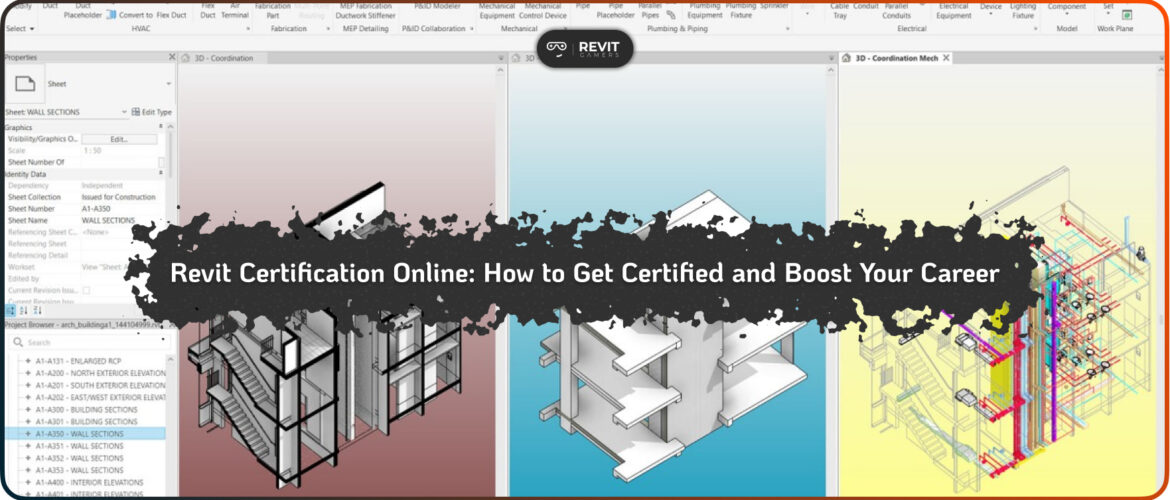
In today’s competitive architecture, engineering, and construction industries, holding a recognized Revit certification can dramatically boost your career opportunities. Revit Certification Online programs allow professionals and students to obtain official credentials without leaving their home or office. These certifications demonstrate a verified level of expertise in BIM workflows, modeling standards, and project management using Revit. Employers value certified professionals because they bring a predictable level of skill and efficiency to projects.
This article explores the importance of Revit certification, the types of credentials available, recommended online programs, and strategies for successful exam preparation. Whether you are a beginner seeking to validate your skills or an experienced user aiming to formalize your knowledge, pursuing an online Revit certification can accelerate career growth, enhance your portfolio, and open doors to higher-paying roles. By the end of this guide, you’ll understand the pathways, benefits, and resources to achieve certification efficiently and confidently.
Learn more: Revit Classes Comparison: In-Person vs Online with Visuals
Revit Gamers is offering
The most efficient
& market's only animated Revit training
Learn More
Why Get Revit Certified
Obtaining a Revit certification provides tangible benefits for your career. Revit Certification Online confirms that you meet industry standards for model creation, collaboration, and documentation. Certified professionals are often preferred by employers, which can lead to promotions, higher salaries, and access to more complex or high-profile projects. Certification also demonstrates commitment to professional growth, improving your credibility with clients, colleagues, and management.
It provides a structured framework to measure your skills, ensuring that you possess the necessary knowledge in areas such as parametric modeling, family creation, worksharing, and project documentation. Beyond personal career advantages, certification improves workflow consistency across teams, as certified users are trained in standardized practices. This reduces errors, streamlines project delivery, and enhances collaboration in multi-disciplinary BIM environments. For freelancers, certification can boost client confidence, enabling them to win contracts that might otherwise require proof of formal expertise. Overall, a Revit certification acts as a competitive differentiator in a crowded job market, validating your technical skills and signaling your ability to handle professional BIM projects.
Types of Revit Certification
Autodesk offers several levels of Revit Certification Online, each designed to target different skill levels. The most common are Autodesk Certified User (ACU), Autodesk Certified Professional (ACP), and specialized certifications for architecture, MEP, and structural disciplines. ACU is suitable for beginners, verifying fundamental knowledge and basic modeling skills. ACP is designed for advanced users, assessing expertise in managing complex projects, collaboration, and professional standards. Specialist certifications focus on specific Revit applications or workflows, such as rendering, BIM management, or family creation. Selecting the appropriate certification depends on your experience, career goals, and the expectations of your target employers.
Online preparation courses often include practice exams tailored to each certification type, ensuring candidates are familiar with exam formats and required competencies. Understanding the differences between certifications helps learners focus their efforts on the credential that will provide the most professional value and align with their desired career trajectory.
Learn more: Reset Revit UI: Bring Back Your Lost Panels Easily
Prerequisites & Skill Requirements
Before attempting a Revit Certification Online, you need a solid foundation in essential Revit workflows. For beginner certifications like ACU, basic knowledge of modeling walls, floors, doors, windows, and components is required. Familiarity with views, sheets, and annotations ensures a smooth exam experience. Intermediate to advanced certifications, such as ACP, demand mastery of worksharing, linked files, phasing, families, schedules, and parametric modeling. Professionals should also understand industry best practices, BIM standards, and multi-disciplinary collaboration workflows.
Some certifications recommend completion of specific online courses or accumulated project experience before sitting the exam. By evaluating your current skill level and comparing it with the exam requirements, you can identify knowledge gaps and target areas for improvement. Preparing systematically increases your chances of passing on the first attempt and ensures that your certification reflects genuine professional competency.
Top Online Programs for Revit Certification
Several reputable platforms offer Revit Certification Online preparation courses. Autodesk University, LinkedIn Learning, Udemy, and Coursera provide structured programs covering theory, exercises, and practice exams. The best courses integrate project-based learning, allowing students to practice real-world scenarios while mastering exam content. Look for programs that provide detailed modules, practice quizzes, and guidance on exam strategies. Instructor-led or self-paced formats cater to different learning styles, making preparation flexible.
Reviews and testimonials from previous students often highlight course effectiveness, helping you select the most suitable program. Additionally, courses that focus on discipline-specific workflows—architecture, MEP, or structure—allow targeted preparation aligned with your career objectives. Using a structured online program ensures that your study time is efficient, and that you gain both the skills required for certification and the confidence to apply them in professional projects.
Study Tips & Practice Strategies
Effective preparation for Revit Certification Online requires a combination of theory, hands-on practice, and exam simulation. Start by reviewing the official exam syllabus, then create a study schedule allocating time to each topic. Use real project files to practice workflows, family creation, worksharing, and documentation tasks. Completing practice exams under timed conditions familiarizes you with the format and reduces test anxiety.
Taking notes on common mistakes, using flashcards for parameters and tools, and joining online study groups enhances retention. Focus on weak areas, such as complex family editing, linking files, or schedule creation. Repeating exercises until mastery ensures that skills are both accurate and fast, which is crucial for passing professional-level exams. Balancing study sessions with breaks improves concentration, and combining multiple learning resources—videos, guides, and interactive exercises—reinforces understanding. Consistency and structured practice are the keys to certification success.
Revit Gamers is offering
The most efficient
& market's only animated Revit training
Learn More
Exam Process & Expectations
The Revit Certification Online exam typically consists of multiple-choice questions, project-based tasks, and timed exercises. Exams can be taken remotely or at certified testing centers. Duration, number of questions, and passing criteria vary depending on the certification level. Professional-level exams often require completing realistic tasks within Revit, such as creating parametric families, generating schedules, or coordinating multi-disciplinary models. Understanding the exam environment, rules, and submission protocols is essential to avoid technical issues. Candidates are advised to ensure their software version matches exam requirements and that they have a reliable internet connection for online testing.
Reviewing practice exams helps candidates anticipate question types, manage time effectively, and apply problem-solving skills under pressure. Preparing strategically ensures not only passing the exam but also gaining practical knowledge that is immediately applicable in real projects.
Learn more: change units in Revit: How to Change Project Units for International Projects
Career Benefits After Certification
Holding a Revit Certification Online unlocks numerous career advantages. Certified professionals enjoy higher employability, access to complex projects, and increased earning potential. Employers trust certified users to maintain consistent standards, collaborate efficiently, and handle multi-disciplinary BIM projects. Certification signals proficiency in advanced workflows, parametric modeling, and project coordination, which is especially valuable for promotions or freelance work. For freelancers, certification enhances credibility, helping to attract premium clients or larger contracts. Additionally, professionals can leverage their certification to mentor team members, contribute to office standards, and participate in high-profile projects with confidence. Certification ensures that the skills learned are recognized industry-wide, creating a competitive edge in the global market.
Conclusion
Obtaining Revit Certification Online is a strategic investment in your career. It validates your skills, boosts confidence, and opens doors to professional opportunities in architecture, engineering, and construction. By choosing the right certification, preparing with reputable online programs, and following structured study strategies, you can pass exams efficiently and apply knowledge immediately. Take the next step—enroll in an online Revit certification program today, enhance your BIM expertise, and elevate your career to the next level.
Revit Gamers is offering
The most efficient
& market's only animated Revit training
Learn More
Leave a Reply
You must be logged in to post a comment.