
News & Events
Autodesk Revit Course Online: How to Choose the Best Autodesk Revit Course Online for Your Skill Level
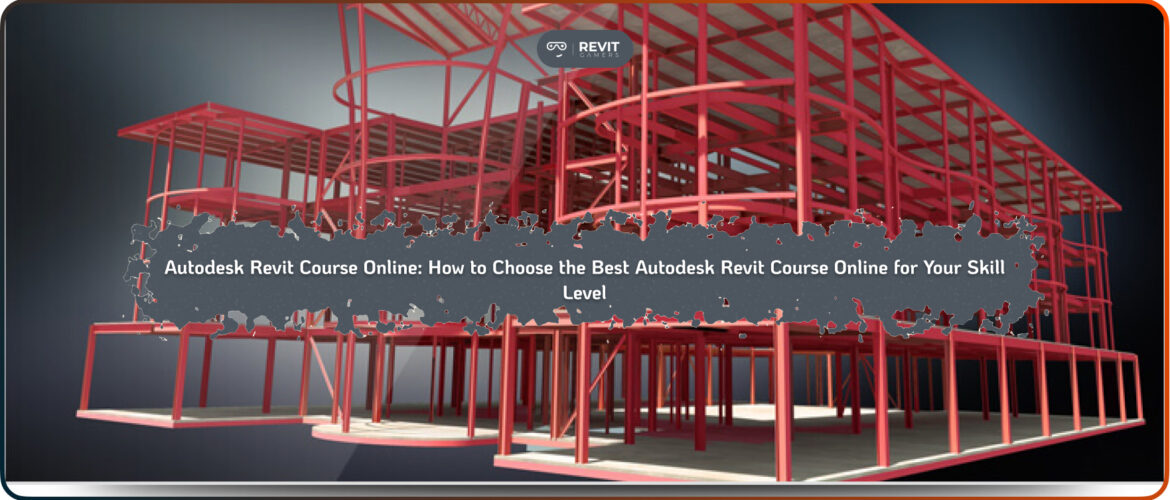
Selecting the right Autodesk Revit Course Online is crucial for anyone aiming to build or enhance BIM skills efficiently. Revit is a powerful tool used globally in architecture, engineering, and construction, but the abundance of online courses can make it challenging to find the one that fits your specific skill level. Enrolling in a course that aligns with your current knowledge ensures that you learn effectively, avoid unnecessary frustration, and acquire skills you can immediately apply in real-world projects. Beginners need foundational guidance on the Revit interface and basic tools, intermediates benefit from project-based learning and collaboration exercises, and advanced users require in-depth modules covering parametric families, worksharing, and rendering workflows.
Choosing the wrong course can slow progress or leave gaps in understanding, especially when the course content is too basic or too advanced for your experience. This guide will help you navigate the options, highlight key features for each skill level, and explain what makes an Autodesk Revit Course Online truly effective. By following this roadmap, learners can confidently select a course that accelerates learning, maximizes skill retention, and prepares them for professional BIM challenges. Whether your goal is to strengthen your foundational skills, enhance workflow efficiency, or master advanced Revit capabilities, this guide provides a clear strategy to ensure your online learning journey is productive, engaging, and results-driven.
Learn more: Revit Classes Comparison: In-Person vs Online with Visuals
Revit Gamers is offering
The most efficient
& market's only animated Revit training
Learn More
Why Skill-Level Matters in Revit Courses
Understanding your current Revit skill level is essential when choosing an Autodesk Revit Course Online. Beginners require structured instruction that introduces the interface, core modeling tools, and basic project workflows without overwhelming complexity. A course too advanced may confuse novices, slowing progress and creating frustration. Intermediate learners, on the other hand, need a curriculum that expands on foundational skills, introducing project-based exercises, collaboration, and parametric modeling while reinforcing previously learned concepts. Advanced users seek courses that cover complex workflows, including worksharing, rendering, advanced family creation, and multi-disciplinary BIM coordination. Matching a course to your skill level not only ensures comprehension but also maximizes the efficiency of your study time.
Courses designed for the appropriate level also provide exercises that build confidence and practical competency, enabling learners to apply Revit in real-world scenarios effectively. Misalignment between skill and course difficulty often leads to skipped lessons, confusion, and gaps in understanding, which may hinder career progress. Choosing a course that aligns with your abilities ensures consistent progress, encourages skill application, and ultimately delivers measurable improvement. When evaluating online courses, consider the depth of content, type of projects, instructor guidance, and the balance between theory and practical application. Skill-aligned courses help learners retain knowledge, prevent wasted time, and provide a clear path from beginner basics to advanced mastery.
Tips for Beginners
Beginners looking for the best Autodesk Revit Course Online should focus on courses that provide structured, step-by-step instruction. Core lessons should cover the interface, navigation, and fundamental tools such as walls, doors, windows, floors, and basic components. High-quality beginner courses often include interactive video tutorials, practical exercises, and small-scale projects that allow learners to apply concepts immediately. It’s important to choose courses that break down lessons into manageable modules, preventing information overload while ensuring every essential topic is covered. Features like downloadable templates and families can help beginners experiment without starting from scratch.
Courses should also teach basic project organization, views, and sheets, enabling students to complete small-scale Revit projects confidently. A course with beginner-friendly guidance on annotations, dimensions, and simple schedules prepares learners to handle their first real-world tasks. While exploring Revit independently is possible, structured courses accelerate learning, build confidence, and prevent bad modeling habits. For beginners, the ideal Autodesk Revit Course Online combines visual explanations, short exercises, and ongoing reinforcement to ensure mastery of fundamental skills. When selecting a course, check whether it offers community support or instructor Q&A, as feedback is crucial for resolving confusion and maintaining motivation. By prioritizing structured guidance and practical exercises, beginners can develop a solid foundation for more advanced learning.
Tips for Intermediate Users
Intermediate users should seek an Autodesk Revit Course Online that moves beyond the basics and introduces project-based learning. At this level, learners are ready to tackle real-world BIM workflows, including worksharing, collaborative modeling, and parametric family creation. Courses designed for intermediates often focus on applying tools within multi-story projects, incorporating floors, walls, roofs, and structural elements in cohesive models. Emphasis should be placed on developing workflow efficiency, mastering view templates, using schedules effectively, and creating detailed construction documents.
Practical exercises are essential at this stage, as they allow learners to translate theoretical knowledge into actionable skills. Advanced project simulations, even if still within guided exercises, help learners prepare for office or freelance environments. Feedback mechanisms, instructor-led Q&A, and interactive assignments provide additional reinforcement. Choosing the right intermediate course ensures a seamless transition from foundational knowledge to advanced modeling capabilities.
Learners benefit from modules that focus on parametric families, templates, and project standards, enabling consistent and professional outputs. Courses that integrate collaboration tools like linked files, worksharing, and cloud-based coordination prepare students for teamwork-intensive BIM projects. By selecting a course tailored to their experience, intermediate learners can strengthen technical skills, improve modeling efficiency, and gain confidence for more complex tasks.
Learn more: Reset Revit UI: Bring Back Your Lost Panels Easily
Tips for Advanced Users
Advanced learners need an Autodesk Revit Course Online that covers specialized workflows and professional-grade skills. At this stage, courses should focus on complex parametric families, worksharing across multiple disciplines, rendering techniques, and BIM project coordination. Advanced modules often incorporate multi-user collaboration, large model management, and advanced scheduling strategies. Learners should look for courses that emphasize real-world projects, offering opportunities to practice creating detailed, high-quality models under realistic constraints.
Certification options can validate expertise and enhance career prospects. A well-structured advanced course helps users optimize modeling efficiency, reduce errors, and maintain professional standards in documentation. Participants should be able to apply knowledge independently, troubleshoot complex visibility or linking issues, and implement office standards in every project. Instructor support, practical demonstrations, and downloadable resources, including templates and advanced families, are invaluable for deepening expertise. Choosing the right course allows advanced users to refine technical skills, master professional workflows, and maintain a competitive edge in the BIM and architecture industries. By focusing on specialization and real-world application, learners gain immediate, measurable improvements.
Revit Gamers is offering
The most efficient
& market's only animated Revit training
Learn More
Course Formats: Live vs Self-Paced
When choosing an Autodesk Revit Course Online, understanding course format is essential. Live courses provide real-time interaction with instructors, enabling Q&A, immediate feedback, and collaborative exercises. This format is ideal for learners who thrive with guidance, structured schedules, and active engagement. Self-paced courses, on the other hand, allow students to learn at their convenience, pause lessons, and repeat complex sections as needed. Self-paced programs suit professionals balancing work commitments or those preferring independent study. Some courses combine both formats, offering live sessions supplemented with recordings for flexible learning.
Beginners may benefit from live guidance to establish strong fundamentals, while intermediates and advanced users can maximize self-paced modules to focus on specialized projects. Evaluating your learning style, availability, and need for interaction helps determine the ideal format. Ultimately, the combination of flexible scheduling and interactive content ensures that learners can progress efficiently, retain knowledge, and apply skills effectively across real-world projects.
Reviews & Testimonials
Before enrolling in any Autodesk Revit Course Online, checking reviews and testimonials is critical. Feedback from previous students reveals course effectiveness, clarity of instruction, and practical applicability. Look for comments on project exercises, instructor accessibility, and real-world skill development. Positive testimonials indicate that learners completed projects successfully, gained confidence, and could apply Revit tools in professional scenarios. Peer reviews can also highlight hidden challenges or overlooked benefits, such as quality of downloadable resources, responsiveness of support, or the level of advanced content.
Comparing multiple reviews helps identify courses that consistently deliver results across different skill levels. Testimonials also provide insight into the course pace, teaching style, and student engagement, all of which affect learning outcomes. By evaluating reviews critically, prospective learners can select a course that aligns with their skill level, learning preferences, and professional goals. A well-reviewed course not only builds confidence but also ensures that the investment of time and money produces tangible improvements in Revit proficiency.
Learn more: change units in Revit: How to Change Project Units for International Projects
How to Make the Final Decision
Selecting the Best Autodesk Revit Course Online requires a careful assessment of content, structure, and outcomes. Start by reviewing the syllabus to ensure it matches your skill level, whether beginner, intermediate, or advanced. Check for project-based exercises, downloadable templates, and family libraries that enhance practical learning. Evaluate instructor experience, course reviews, and availability of support. Consider whether the course offers certification, which can be valuable for career progression.
Compare live versus self-paced formats based on your learning style and schedule flexibility. Factor in cost versus expected benefits, prioritizing courses that provide both depth and practical application. Align course selection with your professional goals, whether entering the workforce, enhancing your portfolio, or mastering specialized BIM workflows. A structured approach ensures that the chosen course accelerates learning, strengthens skills, and prepares you for real-world Revit challenges. Making an informed decision helps prevent wasted time and guarantees measurable progress in your Revit journey.
Conclusion & CTA
Choosing the right Autodesk Revit Course Online is the fastest way to develop Revit skills efficiently and professionally. From beginner foundations to advanced BIM workflows, the right course provides structured content, project-based exercises, and expert guidance. Evaluating course features, practical projects, format, and reviews ensures alignment with your skill level and learning goals. By selecting a course tailored to your experience, you can accelerate learning, gain hands-on expertise, and confidently apply Revit tools in real-world projects. Don’t wait—enroll now in a course that combines interactive instruction, project simulations, and practical exercises designed to build your proficiency, portfolio, and career opportunities. With the right course, mastering Revit and excelling in modern BIM workflows becomes achievable, efficient, and rewarding.
Revit Gamers is offering
The most efficient
& market's only animated Revit training
Learn More
Leave a Reply
You must be logged in to post a comment.