
News & Events
Revit Beginner Course: From Zero to Job-Ready Skills
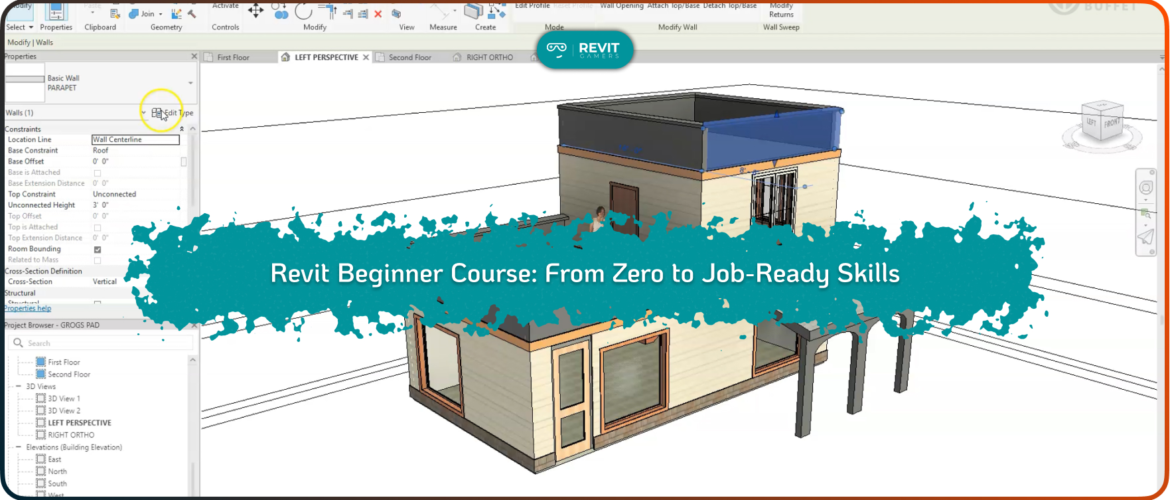
Starting your journey in BIM can feel overwhelming, especially when you have no prior experience with design software. That’s where a well-structured Revit Beginner Course becomes essential. Instead of jumping between random tutorials or incomplete lessons, a beginner-focused course provides a clear roadmap from zero knowledge to job-ready skills. Revit is widely used in architecture, engineering, and construction, making it one of the most valuable tools to learn today.
However, the challenge isn’t just learning the software—it’s learning it the right way. Beginners often struggle with understanding the interface, managing views, and using core tools efficiently. A proper course simplifies this process by breaking down complex concepts into manageable steps. With the right guidance, you can quickly move from basic modeling to creating complete project files that resemble real-world work. The goal of a high-quality Revit Beginner Course is not just to teach tools, but to help you think like a BIM professional.
By focusing on practical exercises, structured lessons, and real examples, beginners can build confidence and avoid common mistakes. Whether your goal is to get a job, start freelancing, or simply upgrade your technical skills, choosing the right course will determine how fast and how effectively you progress.
Learn more: Revit Classes Comparison: In-Person vs Online with Visuals
Revit Gamers is offering
The most efficient
& market's only animated Revit training
Learn More
Why Beginners Need a Structured Learning Path
One of the biggest mistakes beginners make is trying to learn Revit through scattered resources. Watching random videos without a clear sequence often leads to confusion and gaps in knowledge. A Revit Beginner Course solves this problem by offering a structured learning path that guides students step by step. Instead of guessing what to learn next, learners follow a logical progression—from understanding the interface to modeling complete buildings. This structured approach reduces frustration and ensures that each concept builds on the previous one. Beginners need repetition, clarity, and context, which only a well-designed course can provide. Without structure, learners may understand individual tools but fail to apply them in real projects.
A good course bridges this gap by combining theory with practical exercises. It also helps learners develop workflow thinking, which is essential in professional environments. Another advantage of structured learning is time efficiency. Instead of wasting hours searching for tutorials, students focus on learning what actually matters. Courses designed for beginners also include common troubleshooting tips, helping learners avoid mistakes early on. Ultimately, a structured Revit Beginner Course transforms learning from a confusing process into a clear, goal-oriented journey that leads to real, usable skills.
Core Skills You Will Learn
A high-quality Revit Beginner Course focuses on teaching the essential skills needed to build a solid foundation. These include understanding the Revit interface, navigating views, and working with basic modeling tools such as walls, doors, windows, and floors. Beginners also learn how to manage levels, grids, and layouts, which are crucial for organizing any project. Beyond modeling, courses introduce key concepts like families, parameters, and basic annotations, helping students understand how elements interact within a BIM environment.
Learning how to create views, sheets, and simple documentation ensures that students can present their work professionally. Another critical skill is project organization—knowing how to structure files, manage elements, and maintain consistency across views. These foundational skills are not just technical; they shape how you approach modeling and problem-solving in Revit. A well-designed Revit Beginner Course ensures that learners practice each skill through exercises, reinforcing knowledge and building confidence. By mastering these core areas, beginners are prepared to handle small projects independently and gradually move toward more advanced workflows.
Learning Through Real Projects
The most effective way to learn Revit is by doing real projects. A Revit Beginner Course that includes project-based learning allows students to apply concepts in practical scenarios rather than just watching tutorials. For example, beginners might start with a simple residential layout, gradually adding walls, doors, windows, and basic furniture. As the project develops, learners gain a deeper understanding of workflows, relationships between elements, and common challenges. Project-based learning also improves problem-solving skills, as students encounter real issues that require logical solutions.
Instead of memorizing tools, they learn how to use them in context. This approach builds confidence and prepares learners for real-world tasks. Many modern courses now prioritize project-based learning because it delivers faster and more meaningful results. Some platforms, including Revit Gamers, have adopted this method by focusing on structured projects that guide learners from simple tasks to more complete building models. This kind of hands-on approach ensures that students don’t just understand Revit—they can actually use it. By the end of a project-based Revit Beginner Course, learners typically have completed models that can be added to their portfolio, making them more attractive to employers or clients.
Learn more: Reset Revit UI: Bring Back Your Lost Panels Easily
Common Mistakes Beginners Should Avoid
Beginners often make predictable mistakes when learning Revit, especially without proper guidance. One common issue is focusing too much on tools instead of understanding workflows. A Revit Beginner Course helps avoid this by teaching how tools fit into the bigger picture. Another mistake is skipping fundamentals, such as levels, grids, and proper project setup, which leads to problems later in the modeling process. Beginners also tend to rely heavily on trial and error, wasting time and developing inefficient habits. Without structured learning, they may use incorrect modeling techniques that become difficult to fix later.
Poor file organization is another major issue, making projects messy and hard to manage. Additionally, many learners ignore documentation and presentation skills, focusing only on modeling. However, real-world projects require clear drawings, sheets, and annotations. A well-designed course addresses these mistakes early, ensuring that learners build strong habits from the beginning. By following a structured Revit Beginner Course, students can avoid frustration, save time, and develop a professional approach to modeling and project management.
Revit Gamers is offering
The most efficient
& market's only animated Revit training
Learn More
Choosing the Right Beginner Course
Not all courses are created equal, and selecting the right Revit Beginner Course can significantly impact your learning experience. The best courses are structured, project-based, and designed specifically for beginners. Look for programs that include step-by-step lessons, practical exercises, and real-world examples. Courses that combine clear explanations with hands-on practice tend to deliver the best results. It’s also important to choose a course that progresses logically, starting from basics and gradually increasing in complexity.
Some modern learning platforms have started focusing more on depth and real application rather than surface-level tutorials. For instance, platforms like Revit Gamers emphasize detailed explanations and structured project workflows, helping learners understand not just how tools work, but how they are used in real projects. This type of approach ensures better retention and practical skills. When choosing a course, also consider support options such as Q&A, community access, or instructor feedback. A high-quality Revit Beginner Course should guide you from zero knowledge to confident project execution without overwhelming you.
From Beginner to Job-Ready Skills
The ultimate goal of any Revit Beginner Course is to make you job-ready. This means going beyond basic knowledge and developing skills that can be applied in professional environments. Job-ready skills include efficient modeling, understanding BIM workflows, creating documentation, and collaborating with others.
Courses that include real projects and practical exercises prepare learners for tasks they will encounter in offices or freelance work. Employers look for candidates who can not only use tools but also think critically and solve problems. A strong beginner course builds this mindset by combining theory with hands-on experience. Over time, learners become faster, more accurate, and more confident in their abilities. Completing projects also helps build a portfolio, which is essential when applying for jobs. A well-structured Revit Beginner Course ensures that by the end of the program, students can handle basic professional tasks and continue learning independently.
Learn more: change units in Revit: How to Change Project Units for International Projects
The Importance of Consistency and Practice
Consistency is the key to mastering Revit. Even the best Revit Beginner Course requires regular practice to be effective. Learning in short, consistent sessions helps reinforce concepts and prevents burnout. Repetition is essential, especially for beginners who are still getting familiar with the interface and workflows. Practicing small tasks daily can lead to significant improvement over time.
Courses that include exercises, projects, and challenges encourage consistent learning habits. It’s also important to revisit previous lessons and refine your skills. Some learners progress faster because they actively apply what they learn, rather than just watching tutorials. Choosing a course that encourages practice and provides structured exercises can make a huge difference. By staying consistent, beginners can quickly move from basic understanding to confident execution.
Revit Gamers is offering
The most efficient
& market's only animated Revit training
Learn More
Conclusion
A Revit Beginner Course is the fastest and most effective way to go from zero knowledge to job-ready skills. By choosing a structured, project-based program, you can avoid common mistakes, build confidence, and develop practical experience that translates into real-world work. The right course doesn’t just teach tools—it teaches how to think, work, and solve problems like a professional. If you’re serious about learning Revit and starting a career in BIM, now is the time to take action. Choose a course that focuses on real projects, structured learning, and practical application, and start building your skills today.
Leave a Reply
You must be logged in to post a comment.